A homepage grounded in city life
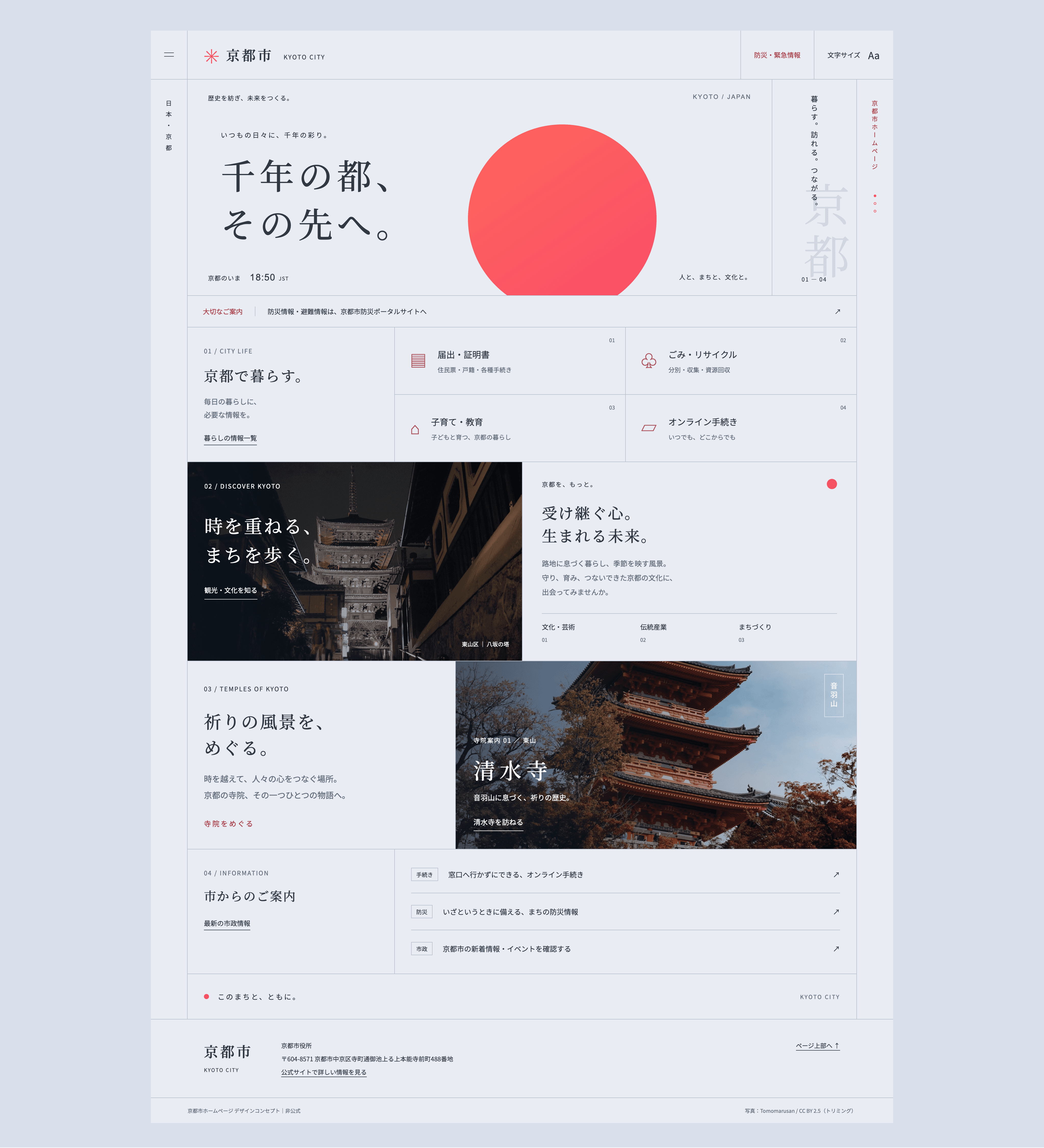
The homepage introduces Kyoto through its identity and the everyday needs of its residents. A distinctive opening leads into services such as documents, waste collection, education, and online support, followed by cultural content and city information.
A structured grid gives each subject a clear place within the page. Emergency information and language switching remain within the shared header, while links to transport, temples, and the map connect the homepage to the wider experience.
A key challenge
Some Japanese websites present many links, detailed explanations, and competing visual elements together—a density that can feel overwhelming to Western viewers accustomed to more minimal layouts. Cross-cultural research suggests differences in attention to context and prominent objects, offering one possible lens for understanding these conventions.
Familiarity with dense layouts, however, does not necessarily make information easier to find.
For Kyoto City, the design balanced supporting detail with clear routes into everyday tasks, using grouped content, descriptive labels, and consistent navigation. Typography was adapted separately to maintain a clear hierarchy in Japanese and English.

Creating a starting point for cultural discovery
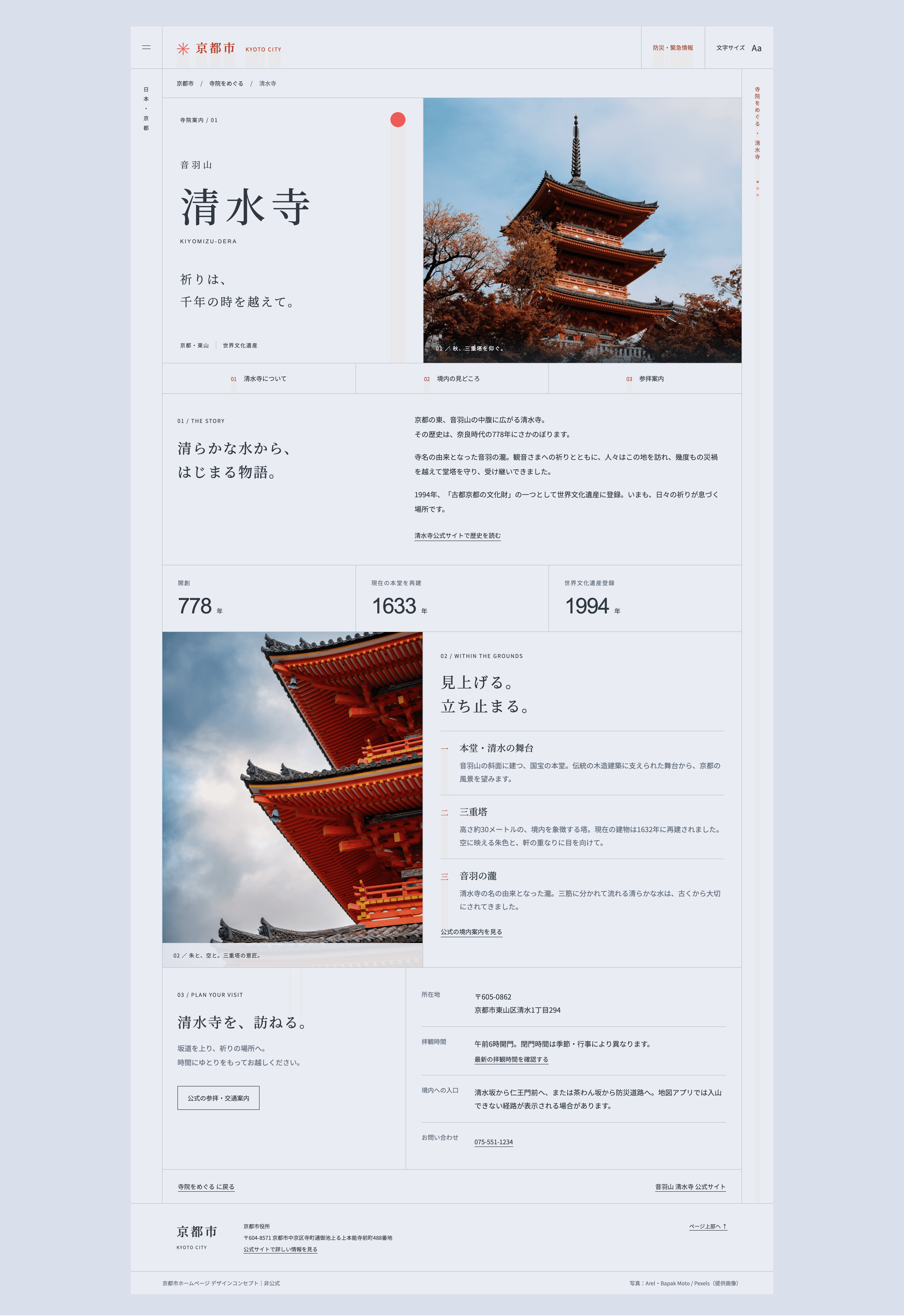
The temples and shrines directory combines architectural imagery with a consistent set of practical details. Filters by place type and area help people narrow their options, while short introductions communicate the character of each destination.
Each entry connects to further information or the map, supporting a natural progression from discovering a place to planning a visit. Guidance on respectful behaviour acknowledges that these destinations remain active places of worship.
Helping people move through Kyoto
The transport page brings together trains, buses, walking, and taxis, helping people understand the options available for different journeys. Illustrated sections introduce each mode, while example routes connect transport choices with recognisable destinations.
Guidance on tickets, luggage, accessibility, and the final approach on foot supports the practical decisions involved in planning a journey. Links to the map and destination pages keep transport information connected to the places people want to reach.

Creating a starting point for cultural discovery
The temples and shrines directory combines architectural imagery with a consistent set of practical details. Filters by place type and area help people narrow their options, while short introductions communicate the character of each destination.
Each entry connects to further information or the map, supporting a natural progression from discovering a place to planning a visit. Guidance on respectful behaviour acknowledges that these destinations remain active places of worship.



Waste and recycling
The waste and recycling page organises detailed guidance into illustrated categories, short explanations, and clear next steps. Residents can identify common household items, understand how to separate them, and find the relevant collection information.
Specific examples, such as separating a bottle from its cap and label, make the instructions concrete. Supporting guidance covers exceptions, including private building collections and items that require a separate disposal route.

Connecting information to place
The area map brings destinations, neighbourhoods, and transport points into a shared geographical view. Category filters and a corresponding place list support both open exploration and the search for a particular destination.
Connections between the map and individual pages help people move between cultural context and practical orientation. The list offers an additional way to browse places, keeping destination information accessible alongside the map.